
Europe is a top market for deployments of energy storage, as companies expand investment for the technology. A recent report from Wood Mackenzie said Europe’s utility-scale pipeline for energy storage exceeds 130 GW, with more 3,000 projects across at least 37 countries. The report said almost 19 GW of energy storage capacity is currently operating. The report also noted that more storage projects are expected to come online in the 2025–2026 period than in the previous 10 years combined, with a particular focus on long-duration systems.
Industry analysts have told POWER a key to continued growth for energy storage in Europe will be how emerging markets are able to navigate regulatory hurdles to attract more investment. The UK and Germany are leading European markets for storage; the UK in late 2024 released The Clean Power 2030 Action Plan, which called for more energy storage to be deployed. The UK grid-scale battery storage market last year grew 45% in terms of operational capacity, as about 4 GWh of storage came online in 2025, bringing the UK’s total operational capacity to 12.9 GWh.
Alex Marshall, a group director with Clarke Energy, a UK-headquartered Rehlko company that specializes in engineering, installing, and maintaining distributed power systems, told POWER: “Long‑duration energy storage [LDES] has a clear and growing role to play in Europe as power systems adapt to higher levels of intermittent renewables, increasing grid constraints, and rising demand from electrification and rapidly expanding data center development. Increasingly, innovation in this space is less about individual technologies and more about how storage is integrated into a wider flexible generation ecosystem.” Said Marshall, “In markets such as the UK and Ireland, momentum is building behind grid‑connected, stand‑alone storage and grid‑scale balancing assets, supported by market frameworks that value system services and flexibility. These projects are playing an important role in enabling renewable integration and maintaining system stability.”
Marshall said that some markets “are seeing storage deployed more directly in combination with gas engines, either as behind‑the‑meter solutions or as innovative hybrid, grid‑connected assets. This approach is particularly relevant for data center and industrial customers, where reliability, resilience, and power quality are critical, and where innovation is focused on combining long‑duration and battery storage with dispatchable generation to deliver firm, flexible capacity. Gas‑engine‑based power, particularly when integrated with battery and longer‑duration storage technologies, offers a practical and scalable pathway to maintain system reliability while supporting decarbonization objectives. These hybrid configurations allow operators to optimize asset utilization, reduce renewable curtailment, and provide dependable power through extended periods of low renewable output; a requirement that is becoming increasingly important for data centers and other mission‑critical loads.”
Form Energy in March announced a project in Ireland that would showcase the company’s LDES product. Form, headquartered in Massachusetts and led by former Tesla Energy executive Matero Jaramillo, is commercializing its iron-air battery, which is designed to deliver about 100 hours of duration at full rated power. The system operates through the reversible oxidation, or rusting, of iron. Form Energy said a 10-MW/1,000-MWh project is planned in Ireland through a partnership with developer FuturEnergy Ireland. Form Energy, whose technology recently was announced as part of a data center project in Minnesota (a 300-MW/30-GWh installation, the largest planned battery storage project in GWh capacity worldwide to date), has said it expects to bring the Ireland project online in 2029. The company said it wants to demonstrate the role that multi-day energy storage can play in that country, which established its Electricity Storage Policy Framework in 2024. Long-duration energy storage was identified as an important technology to meet emissions targets, while supporting power reliability and resilience.
Mark Dryden, an investor at WIND Ventures, an investment capital group, told POWER: “Form Energy’s new project announcement in Ireland is one of several recent announcements that show that the demand and market structures for LDES have finally arrived. Form also recently announced a massive 30-GWh plant with Xcel Energy in Minnesota—exploding load growth from AI [artificial intelligence], which needs five nines uptime and firm energy, is proving a real boon to the LDES sector. Last year, Italy-based Energy Dome entered a commercial partnership to supply Google data centers. Highview Power, one of the original pioneers of LDES, recently broke ground on a 300-MWh plant in the UK, with a multiple-gigawatt pipeline in the UK to follow.”
“Form Energy’s battery solution is set to fill a critical gap in Ireland’s power system. Their pioneering 100-hour, iron-air battery technology will provide a first opportunity to deliver large volumes of clean power across multiple days, and in doing so provide a boost to Ireland’s energy goals,” said FuturEnergy Ireland CEO Peter Lynch. “The technology is modular, scalable, and locationally flexible, enabling it to simultaneously solve local grid congestion and the linked issue of wasted renewable power.”
Helen McEntee, minister for foreign affairs and trade, and minister for defense for Ireland, at a contract signing ceremony at Form Energy’s U.S. headquarters in March, said the partnership “will help boost and expand Ireland’s clean energy usage … Ireland and the United States need to be able to work together to take on today’s challenges, meeting the needs of affordable energy with new technologies.”
Rafael Narezzi, CEO and co-founder of Centrii (formerly Cyber Energia), told POWER, “Projects like Form Energy’s installation in Ireland reinforce a broader shift already underway—what looks like energy storage is, in reality, becoming critical infrastructure. Behind every battery energy storage system [BESS] lies a complex network of operational technology controlling, monitoring, and connecting directly to the grid. That means a cyber incident isn’t just about data—it’s about energy availability, stability, and national resilience. As the UK and Europe move toward long-duration energy storage, the regulatory direction is becoming clear. Cybersecurity is now a condition for participation, not an afterthought. Compliance with frameworks like the NCSC [National Cyber Security Centre] Cyber Assessment Framework is becoming standard, and investors are demanding proof of readiness, not promises.”
Narezzi, who previously served as Group Chief Technology Officer at CFP Energy, Chief Information Officer at NextEnergy Capital and Wise Energy—and who founded the Cybersecurity Summit, the leading cybersecurity event in South America—said, “Most people still see batteries. But these projects represent megawatts of both risk and opportunity; and in the new energy era, trust is the real currency.”
Recent project announcements underscore Narezzi’s point, particularly when it comes to trust in countries such as China. Sungrow, a China-headquartered energy company known for its solar power equipment and energy storage technology, in late March signed a deal with Romania’s ENEVO Group to supply 1 GWh of BESS across multiple projects in Romania. The companies said the projects will be completed in two phases, with the first 440 MWh set for operation by the end of the year. The projects will feature Sungrow’s PowerTitan 2.0 Liquid Cooled BESS. Sungrow has said the PowerTitan is a benchmark solution for large-scale grid support and renewable energy integration.
Clarke Energy is among European groups working with China; the company collaborated with that country’s Trina Storage on a 40-MWh BESS in Wales. Marshall said that “from the perspective of Clarke Energy … our growing installed base of battery energy storage systems, most notably in the UK, but also across Australia, the United States, and Africa, combined with our established presence supporting data center and flexible generation customers, positions us well to support this transition. As LDES deployments scale, continued innovation in system integration, controls, and long‑term operational support will be just as important as the storage technology itself. The European market is likely to reward solutions that successfully combine proven generation platforms with storage in a way that delivers reliability, flexibility, and sustained performance over the full asset lifecycle.”
 |
|
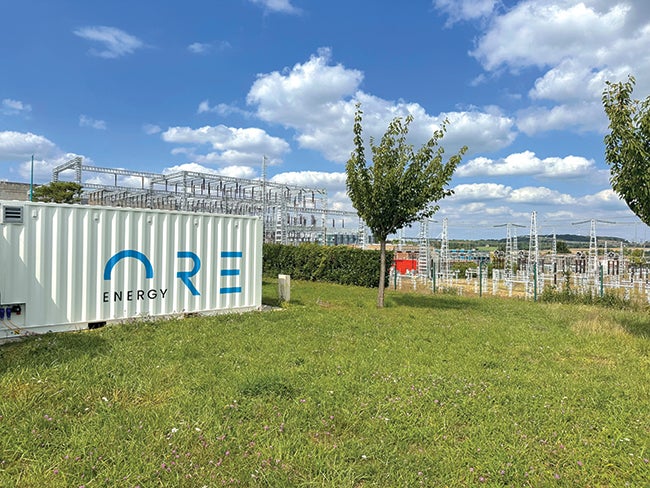
1. Ore Energy, based in the Netherlands, connected a 100-hour pilot energy storage project to the French power grid earlier this year. The installation was done alongside French utility EDF. Courtesy: Ore Energy |
Europe is home to other iron-air-based projects. Ore Energy, based in the Netherlands, connected a 100-hour pilot project (Figure 1) to the French power grid earlier this year. The installation was done alongside French utility EDF. Ore Energy said the French pilot builds on Ore’s earlier grid-connected installation in Delft, the Netherlands. Ore Energy has said the projects highlight the potential for integrating iron-air energy storage systems into existing European power distribution networks.
 |
|
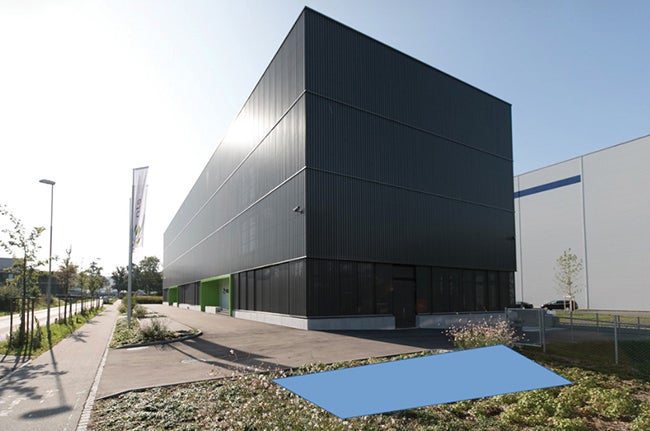
2. Inlyte Energy is partnering with NTS Colocation AG to deploy long-duration energy storage across NTS facilities, beginning with an installation at the NTS Tier 4 Data Center Pilot Site in Bern, Switzerland. The blue box in the photo outlines where the 600-kWh project, targeted for commissioning by the end of this year, will be deployed. Inlyte and NTS have agreed on a plan to deploy up to 2 MW of iron-sodium battery capacity by 2028. Courtesy: Inlyte Energy |
Inlyte Energy is partnering with NTS Colocation AG to deploy LDES across NTS facilities, beginning with a pilot installation at its data center (Figure 2) in Bern, Switzerland. The companies have agreed on a plan to deploy up to 2 MW of iron-sodium battery capacity by 2028, starting with a 600-kWh installation targeted for commissioning at the end of 2026. The companies said the collaboration underscores both companies’ commitment to advancing resilient, sustainable energy infrastructure tailored to the unique constraints of the Swiss data center market, while showcasing global scalability.
Antonio Baclig, CEO of Inlyte Energy, told POWER: “Europe is quickly emerging as a key market for long-duration energy storage, especially as data center operators face rising grid costs, tighter permitting environments, and new transparency requirements around diesel usage under the EU [European Union] Energy Efficiency Directive. There’s a clear need for solutions that are not only cost-effective, but inherently safe and built for long-term infrastructure. Our iron-sodium technology is well aligned with these needs, offering multi-hour to multi-day storage without the fire risks, permitting complexity, or emissions challenges of traditional alternatives. Partnerships like this one with NTS show how long-duration storage can move from pilot to scalable deployment, supporting a more resilient and sustainable energy future for data centers across Europe.”
The growth of BESS in the UK is being led by the expansion of offshore wind installations, along with decarbonization policies. There also has been significant government funding available for energy storage. UK officials have approved several new BESS projects in recent months, including the Thorpe March installation (1,400 MW/3,100 MWh); the Fithie BESS (1,400 MW/2,800 MWh); and the NatPower Teesside GigaPark (1,000 MW/8,000 MWh), a project that combines BESS with maritime electrification.
Arif Gasilov, a partner at Gasilov Group who provides energy regulatory and sustainability strategy consulting across North American and European markets, said there is market context around “why LDES is becoming a priority in European grid planning and what the regulatory and investment landscape looks like as of today. The Form Energy/FuturEnergy Ireland project I would say is interesting less for the technology and rather more for what it signals about Europe’s storage gap.”
Gasilov told POWER, “Ireland is approaching 50% renewable electricity but curtailed over 2 TWh of wind and solar power in 2025 alone, enough to power every home in County Dublin, all because the grid doesn’t have enough duration storage to absorb multi-day surplus and dispatch it during lulls. Short term lithium-ion [2 to 4 hours] helps with frequency regulation but doesn’t solve the multi-day balancing problem that high-wind systems like Ireland’s face. How I think of it is that a 100-hour system at 10 MW is small in absolute terms, but as a demonstration of the use case, it could reshape how European grid operators and regulators think about procurement for storage duration, which is the bigger story.”
Gasilov added, “The overall European LDES market is also being impacted by a few factors we’ve been tracking, some of which include [that] EU member states are required to submit updated National Energy and Climate Plans with higher renewable penetration targets, grid interconnection constraints are limiting how much cross-border balancing can substitute for domestic storage, and the REPowerEU push to reduce gas dependency makes dispatchable storage an energy security question rather than just a climate question. The investment case for LDES in Europe is arguably stronger than in the U.S. right now because European wholesale price volatility is higher [driven by gas pricing] and the regulatory framework is more explicitly supportive of long-duration procurement.”
 |
|
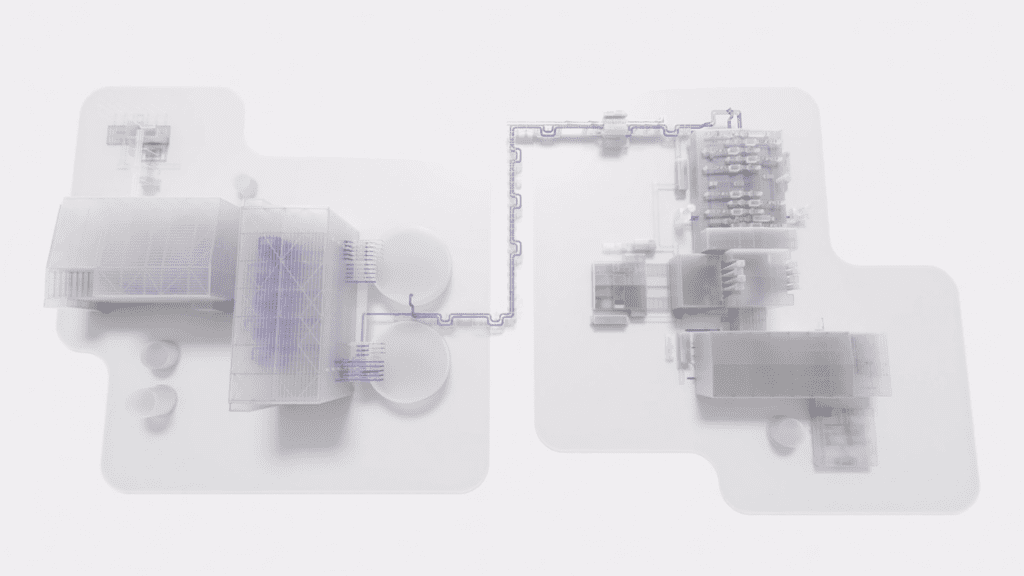
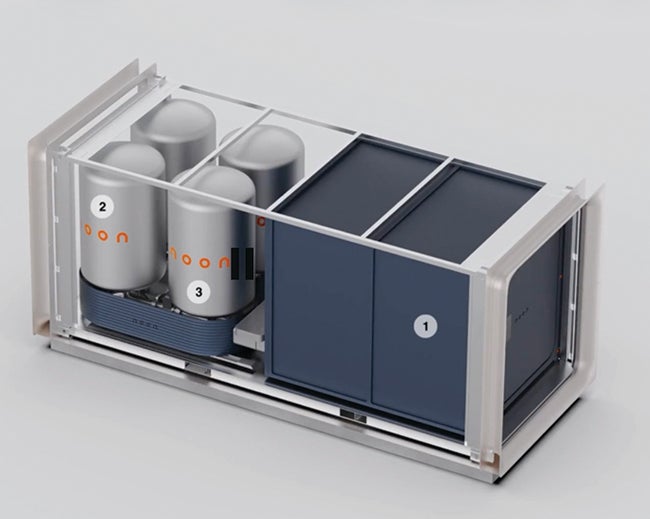
3. Noon Energy’s battery contains reversible solid oxide fuel cell technology that converts between electricity and stored chemical energy. The power block (1) is shown at right. The charge tank (2) stores energy in carbon-based media during charging; the discharge tank (3) stores converted energy storage media formed during discharging, and holds it for the next charge cycle. Courtesy: Noon Energy |
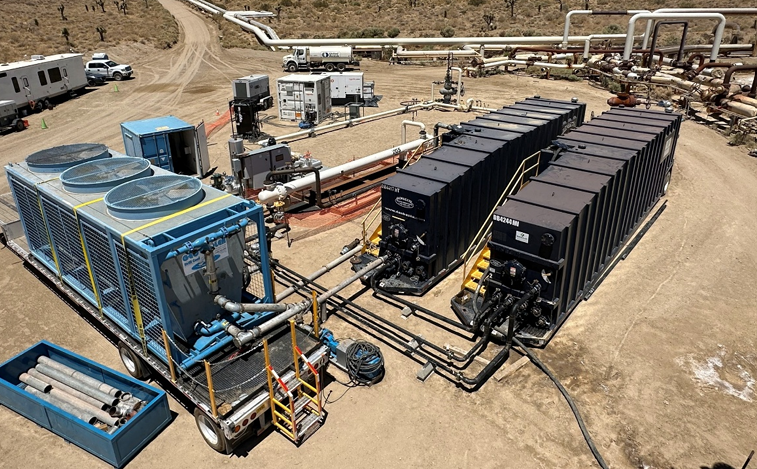
Long-duration energy storage in the U.S. market is being explored as a way to supply power for energy-intensive data centers. POWER saw a demonstration of the technology from Noon Energy (Figure 3) at an event in San Diego, California, in February. Noon Energy, headquartered in Palo Alto, California, announced successful operation of its first pilot LDES system in January. Noon’s system, a battery designed to deliver multi-day to seasonal energy storage, enables “speed-to-power for data-center load growth and other electrification,” according to the company. Noon has said its LDES is based on the company’s reversible solid oxide fuel cell for multi-day storage. Noon has said that each containerized unit provides 100 kW of power with more than 100 hours of uninterrupted energy delivery. The unit’s high energy density also means Noon’s technology has a smaller footprint than some other LDES systems, so it could be deployed in space-constrained locations.
Zeo Energy, a Florida-headquartered provider of residential solar, distributed energy, and energy efficiency solutions, acquired LDES group Heliogen in 2025, adding molten salt and compressed carbon dioxide LDES technologies to its portfolio. Zeo in February signed a memorandum of understanding to develop and supply baseload generation capacity for Creekstone Energy’s data center project that is being built in Utah.
—Darrell Proctor is a senior editor for POWER.