
Commentary
-
 Distributed Energy
Rethinking Utility Incentives and Business Models in the Age of Distributed Energy
Many utilities have been slow to embrace distributed energy resources (DERs) and, in some cases, have reshaped rate structures and compensation mechanisms to limit their growth. This is not simply resistance to change. It is a rational response to incentive structures that favor building infrastructure over technology advancement and energy optimization and efficiency.
-
 Commentary
The Grid Doesn’t Need More Power—It Needs More Control
The energy industry keeps talking about a shortage of power generation. In reality, this is a control problem.
-
 T&D
T&DAfter the L.A. Wildfires: Why Vegetation Management Can’t Afford to Stay on a Fixed Cycle
The utilities best positioned to limit outages, liability, and regulatory scrutiny as they mitigate wildfire risk will manage vegetation as an integrated risk intelligence system, directly connected to their network model, enterprise data strategy, and field execution platforms.
-
 Commentary
Fusion Energy: The $50/MWh Target
Fusion’s first challenge is scientific: can we make it work at scale? Its second, far tougher test is economic: can we make it cheap enough to matter? Global private investment has passed $10 billion, governments are launching new programs, and regulators are beginning to streamline pathways for advanced fusion machines. But one question will determine whether […]
-
 Commentary
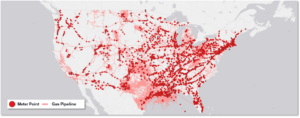
Rethinking Load Growth: New Partnerships Between Power Developers and Midstream Natural Gas Companies
The race to bring new power online has intensified with data centers and other large loads pushing electricity demand to levels never seen before. Utilities are signing power purchase agreements, independent power producers (IPPs) are scrambling to interconnect new generation, and distributed power providers are stepping in where the grid cannot move fast enough. Amid the fight for electrons, a source of clean, reliable electricity is being systematically overlooked.
-
 Commentary
The Blueprint for Meeting the Power Needs of AI
I have spent my entire career working at the intersection of infrastructure and power. Collaborating with colleagues in the utility industry has been an enormous part of my job for almost three decades. So much so, that I have been humbled by how many familiar faces have come up to me at recent power-focused conferences […]
-
 Commentary
Reprocessing Gamble Could Drain Nuclear Waste Fund, Raise Electricity Prices
Electricity bills keep climbing, with Americans paying on average 32% more than five years ago. One of the key dynamics contributing to higher prices is electricity supply is not keeping up with surging demand. Demand growth is a positive marker of American economic expansion and innovation, but consumers can’t keep footing rising costs. The U.S. […]
-
 Commentary
Electric Cooperative Leaders Advocate for Federal Policies Essential to Maintaining Affordable, Reliable Power
Next week, roughly 1,500 electric cooperative leaders will gather in Washington, D.C., to meet with lawmakers and federal agencies at a pivotal moment for the nation’s energy future. They represent not-for-profit utilities that power 42 million Americans—many in rural communities—and they are coming with a clear message: smart energy policies are urgently needed to address […]
-
 Commentary
The Invisible Shield: Why We Must Modernize Critical Infrastructure Protection Now
Protecting critical infrastructure is no longer just about guarding a perimeter; it is about ensuring the foundational productivity of our entire nation. From large power plants to remote substations, the sprawling, decentralized nature of our energy grid makes it a uniquely difficult target to defend.
-
 Cybersecurity
When the Levee Breaks: Managing Cybersecurity Threats During Natural Disasters
Bad actors are quite savvy. Knowing that utility workers are distracted and resources are strained, bad actors like to ramp up their efforts during natural disasters.
While handling these high-pressure situations, information technology (IT) personnel are faced with a challenge on multiple fronts: they have to quickly restore critical services, while simultaneously defending the network against heightened risk of cybersecurity threats.
-
 Commentary
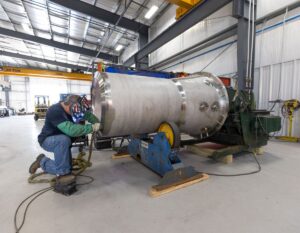
Scaling Advanced Nuclear Power: Picking Winners Now
Across the U.S., more than 60 advanced reactor developers are innovating with billions of dollars in public and private capital to meet rapidly growing electricity demand. But innovation alone does not deliver power. If nuclear power is to be an essential source for exploding power demands across the nation, we must make a strategic choice: […]
-
 Legal & Regulatory
Energy Projects May Qualify for Millions in Refunds: Revisiting Project Costs After IEEPA Ruling
Renewable energy developers, independent power producers, utilities and investors have spent the past several years navigating a shifting trade environment affecting solar modules, batteries and wind components. Due to a recent U.S. Supreme Court decision, that now has changed for those who have utilized international supply chains to build their qualifying electric assets.
-
 Commentary
Rugged Tech for a Modern Grid: Boosting Productivity and Reliability in Utility Operations
To thrive amid increasing demand, companies must digitally transform and integrate advanced technologies into their daily operations.
-
 Commentary
How Artificial Intelligence Can Accelerate Power Delivery to the U.S. Grid
Power demand in the U.S. is rising faster than the grid was designed to accommodate, driven in large part by rapid growth in data centers. Large, concentrated data center loads are clustering in regions where
-
 Data Centers
Protecting the Grid in the Age of Data Center Growth
The rapid growth of data centers in recent years is increasingly causing angst among power operators. Power industry leaders want assurances that the electric grid is reliable, protected, and sustainable for businesses and the public alike.
-
 Commentary
The Missing Intelligence Layer of the Smart Grid
Over the past two decades, utilities have invested billions of dollars building a smarter grid—deploying sensors, automated substations, and advanced analytics platforms capable of monitoring system performance in real time.
-
 Legal & Regulatory
Solar Power Satellites and Orbital Data Centers—International Space Law Implications
In 2011, I published an article in the Boston University Journal of Science & Technology Law examining space-based solar power (SBSP) and the issue of property rights in space, and more specifically, in geostationary orbit (GEO), under the current regime of international treaties and policies. Today, as the demand for computing power grows, that question […]
-
 Commentary
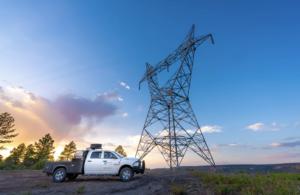
Tri-State’s Vision for Lower Cost, Greater Efficiency About to Become Reality
Tri-State Generation and Transmission Association and its members constantly look for ways to build long-term reliability and lower costs. On April 1, 2026, Tri-State will take an important step toward these goals by joining the western expansion of the Southwest Power Pool Regional Transmission Organization (SPP RTO West).
-
 Commentary
AI’s Energy Problem Was Here Before the War. It Will Stay After.
The conflict in Iran has rekindled a debate that was already building quietly for 24 months in technology circles: energy. Not as a footnote to the artificial intelligence (AI) story, but as a structural constraint at its center. There is an important structural fact about current AI pricing that rarely surfaces in business conversations: the […]
-
 Data Centers
Google Signs Deal for Demand Response Capacity for Data Centers
Tech giant Google has announced what the company calls “A new milestone for smart, affordable electricity growth.” Here’s the text of a blog post from Michael Terrell, Head of Advanced Energy for the company.
-
Commentary
Speed-to-Power: Energy Strategy in the Age of AI
As we move further into 2026, the global energy landscape is increasingly defined by divergence. Oil and natural gas fundamentals are separating, geopolitical volatility remains elevated, and across the industrial economy, execution speed is becoming the defining competitive variable.
-
 Commentary
Resource Plans Drive Clean Energy Value Creation for Investors
Electric utilities have a significant opportunity to create long‑term value by building new clean energy infrastructure—an approach Warren Buffett’s Berkshire Hathaway utilities have followed quietly but effectively for decades. Xcel Energy calls its version of this strategy “Steel for Fuel.”
-
 Commentary
Why Nuclear Power Is Most Viable Option for Data Centers
The first data center to run entirely on self-generated nuclear power will shatter a long-held assumption that computing infrastructure must wait for the grid. A large-scale facility will operate around the clock while controlled fission reactions take place 1,000 feet from its server racks. When that happens, every data center operator still waiting for grid […]
-
 Nuclear
Aerospace Offers an Unlikely Playbook for the Nuclear Energy Industry in 2026
The energy industry, specifically the nuclear sector, is staring down a challenging 2026 with a combination of mounting pressure: tech giants shaking hands on purchasing agreements before facilities are fully built, innovative solutions reinventing the methods of long-established leaders, and mounting demands to deliver efficiency faster. Does that sound familiar? COMMENTARY If you’ve had an […]
-
 Legal & Regulatory
IRS Releases Guidance on Restrictions on Use of Foreign Equipment in Clean Energy Projects
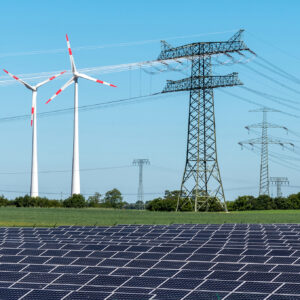
The Internal Revenue Service recently issued its long-awaited guidance on how to determine whether a clean energy project uses too much equipment from Chinese or other prohibited foreign entities to qualify for valuable federal clean energy tax.
-
Legal & Regulatory
FERC: Small QFs Lose FPA Exemptions When Certifications Become Inaccurate
The Federal Energy Regulatory Commission (FERC or the Commission) on February 19 of this year issued an Order on Rehearing and Clarification ruling that qualifying facilities (QFs) that are 20 MW or smaller cannot rely on their exemption from Federal Power Act (FPA) Sections 205 and 206 during periods when their Form No. 556 certifications are outdated due to any material changes from the original certification, such as changes in upstream ownership.
-
 Nuclear
Building Now For What Comes Later: How Nuclear Fits Into the Grid’s Next Decade
Ten years ago, utilities could plan for new 100-megawatt (MW) load requests. That size of energy load fit inside existing forecasts: it could be absorbed, modeled and planned around. Today, load requests have increased to one, two even three gigawatts (GW) at a time. This results in utilities fielding individual load requests that rival full […]
-
Commentary
Reimagining the U.S. Grid: Why VPPs Could Be the Bridge to a More Reliable Future
America’s power grid is aging into obsolescence. Much of the infrastructure that keeps the lights on today was constructed in the 1960s and 1970s, long before the digital and electrified demands of the 21st century took shape. The consequences are increasingly visible: mounting reliability issues, rising costs, and a growing need to modernize a system never designed for the challenges of climate volatility or the surge in load from data centers and electric vehicles.
-
 Commentary
The Magnet Blind Spot in America’s Industrial Strategy
Washington, D.C., has spent the past five years fixating on rare earths—where they’re mined, how they’re processed, and who controls the magnet supply chain. That attention is overdue. But the national conversation still stops one link too soon. The real compounding bottleneck isn’t just the magnets, it’s the motors and drives that use those magnets—traction […]
-
 Commentary
Beyond Reactors: The Full Fuel Cycle Investment Needed for a Nuclear Future
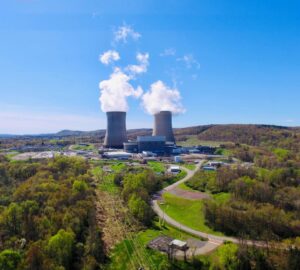
A resurgent nuclear industry cannot succeed unless the U.S. invests in the entire nuclear fuel cycle—from uranium mining to long‑term waste storage. Without strengthening this industrial backbone, nuclear power’s potential may remain more aspiration than reality.