
commentary
-
 Commentary
Fusion Energy: The $50/MWh Target
Fusion’s first challenge is scientific: can we make it work at scale? Its second, far tougher test is economic: can we make it cheap enough to matter? Global private investment has passed $10 billion, governments are launching new programs, and regulators are beginning to streamline pathways for advanced fusion machines. But one question will determine whether […]
-
 Commentary
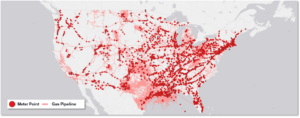
Rethinking Load Growth: New Partnerships Between Power Developers and Midstream Natural Gas Companies
The race to bring new power online has intensified with data centers and other large loads pushing electricity demand to levels never seen before. Utilities are signing power purchase agreements, independent power producers (IPPs) are scrambling to interconnect new generation, and distributed power providers are stepping in where the grid cannot move fast enough. Amid the fight for electrons, a source of clean, reliable electricity is being systematically overlooked.
-
 Commentary
Reprocessing Gamble Could Drain Nuclear Waste Fund, Raise Electricity Prices
Electricity bills keep climbing, with Americans paying on average 32% more than five years ago. One of the key dynamics contributing to higher prices is electricity supply is not keeping up with surging demand. Demand growth is a positive marker of American economic expansion and innovation, but consumers can’t keep footing rising costs. The U.S. […]
-
 Commentary
The Invisible Shield: Why We Must Modernize Critical Infrastructure Protection Now
Protecting critical infrastructure is no longer just about guarding a perimeter; it is about ensuring the foundational productivity of our entire nation. From large power plants to remote substations, the sprawling, decentralized nature of our energy grid makes it a uniquely difficult target to defend.
-
 Cybersecurity
When the Levee Breaks: Managing Cybersecurity Threats During Natural Disasters
Bad actors are quite savvy. Knowing that utility workers are distracted and resources are strained, bad actors like to ramp up their efforts during natural disasters.
While handling these high-pressure situations, information technology (IT) personnel are faced with a challenge on multiple fronts: they have to quickly restore critical services, while simultaneously defending the network against heightened risk of cybersecurity threats.
-
 Legal & Regulatory
Energy Projects May Qualify for Millions in Refunds: Revisiting Project Costs After IEEPA Ruling
Renewable energy developers, independent power producers, utilities and investors have spent the past several years navigating a shifting trade environment affecting solar modules, batteries and wind components. Due to a recent U.S. Supreme Court decision, that now has changed for those who have utilized international supply chains to build their qualifying electric assets.
-
 Commentary
Rugged Tech for a Modern Grid: Boosting Productivity and Reliability in Utility Operations
To thrive amid increasing demand, companies must digitally transform and integrate advanced technologies into their daily operations.
-
 Nuclear
Aerospace Offers an Unlikely Playbook for the Nuclear Energy Industry in 2026
The energy industry, specifically the nuclear sector, is staring down a challenging 2026 with a combination of mounting pressure: tech giants shaking hands on purchasing agreements before facilities are fully built, innovative solutions reinventing the methods of long-established leaders, and mounting demands to deliver efficiency faster. Does that sound familiar? COMMENTARY If you’ve had an […]
-
 Nuclear
Building Now For What Comes Later: How Nuclear Fits Into the Grid’s Next Decade
Ten years ago, utilities could plan for new 100-megawatt (MW) load requests. That size of energy load fit inside existing forecasts: it could be absorbed, modeled and planned around. Today, load requests have increased to one, two even three gigawatts (GW) at a time. This results in utilities fielding individual load requests that rival full […]
-
Commentary
Reimagining the U.S. Grid: Why VPPs Could Be the Bridge to a More Reliable Future
America’s power grid is aging into obsolescence. Much of the infrastructure that keeps the lights on today was constructed in the 1960s and 1970s, long before the digital and electrified demands of the 21st century took shape. The consequences are increasingly visible: mounting reliability issues, rising costs, and a growing need to modernize a system never designed for the challenges of climate volatility or the surge in load from data centers and electric vehicles.
-
 Commentary
The Magnet Blind Spot in America’s Industrial Strategy
Washington, D.C., has spent the past five years fixating on rare earths—where they’re mined, how they’re processed, and who controls the magnet supply chain. That attention is overdue. But the national conversation still stops one link too soon. The real compounding bottleneck isn’t just the magnets, it’s the motors and drives that use those magnets—traction […]
-
 Commentary
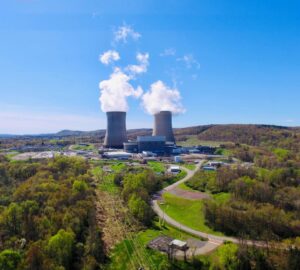
Beyond Reactors: The Full Fuel Cycle Investment Needed for a Nuclear Future
A resurgent nuclear industry cannot succeed unless the U.S. invests in the entire nuclear fuel cycle—from uranium mining to long‑term waste storage. Without strengthening this industrial backbone, nuclear power’s potential may remain more aspiration than reality.
-
 Commentary
Why AI Pilots Stall Without Operating Discipline
Artificial intelligence (AI) has moved quickly from the margins to the mainstream in electric utilities. Control room vendors promote AI-driven insights, asset platforms promise predictive intelligence, and most major utilities are running at least one pilot or proof of concept. More than 80% of North American utilities already report using AI in some form.
-
 Commentary
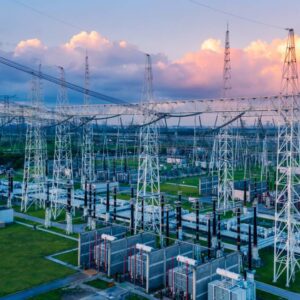
Substation-Sited Generation: A New Frontier for Utility Resilience and Flexibility
For decades, utilities have deployed distributed generation along distribution circuits primarily for single-circuit capacity support and voltage regulation. While these applications remain valuable, a broader opportunity is emerging: siting generators directly at substations to unlock system-level benefits that extend far beyond any single feeder. For rural electric cooperatives, municipal power systems, and even investor-owned utilities […]
-
 Trends
Empowering the Grid: How Utilities Can Harness AI Safely and Effectively
When it comes to the latest technologies, utilities aren’t exactly early adopters—with good reason. Silicon Valley’s motto of “move fast and break things” can have disastrous consequences when applied to an industry tasked with keeping the lights on around the clock for millions of Americans.
-
 Commentary
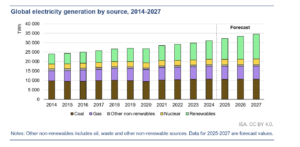
AI’s Power Crunch: Six Trends That Will Decide Who Wins the Next Decade
For the U.S., keeping up with AI’s insatiable appetite is the biggest systemic risk of the next decade. America needs a massive expansion of power plants, transmission lines, and advanced hardware, while using AI itself to drive grid progress and optimize power distribution.
-
 Trends
How Utilities Can Prepare for the AI-Driven Energy Surge
After more than two decades of relative stasis, electricity demand in the U.S. is expected to increase by 25% by 2030 and by more than 75% by 2050, compared to 2023—a transformation largely driven by the surge in new data centers needed to power the artificial intelligence (AI) boom.
-
 Commentary
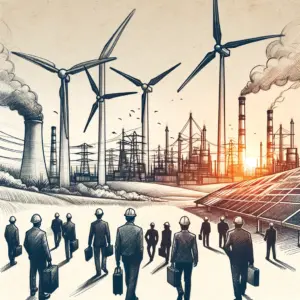
Why 2026 Is the Year the Energy Transition Finally Accelerates
This year will be a pivotal period for the global energy transition. The International Energy Agency’s recent revision to its net-zero roadmap reveals a changing narrative: we are no longer waiting on breakthrough technologies. Sixty-five percent of the emissions reductions we need are achievable with tools sitting on the shelf today. So, the debate is no […]
-
 Commentary
Evolving Technologies, Outdated Regulations Impact Mid-Atlantic Generation Permitting
Energy-generation permitting in the Mid-Atlantic continues to evolve in 2026 not through wholesale deregulation or uniform acceleration, but through procedural and permitting reform and the potential allocation of generation development authority to public utilities. States are enacting these changes to meet the reality of reliability concerns, transmission constraints, large load-growth, and to address frequent obstruction of energy projects by local government.
-
 Commentary
Why America’s Nuclear Future Depends on Its Fuel Supply Chain
For much of the 20th century, the U.S. set the global standard for civilian nuclear energy. American innovation shaped reactor design, safety culture, and regulatory practice worldwide. Yet today, as nuclear power regains prominence amid concerns over climate, energy security, and industrial competitiveness, America faces a quieter but more consequential challenge: the erosion of its nuclear fuel supply chain.
-
 O&M
O&MUnderstanding Cable Rejuvenation: A Modern Approach to Grid Reliability
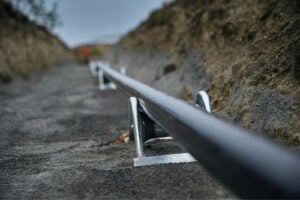
For more than 60 years, polyethylene (PE) and ethylene-propylene rubber (EPR) underground cables have powered communities, industries, and progress. The hope was these cables could last decades before needing to be replaced, but due to water treeing—microscopic moisture-induced formations that degrade insulation and threaten reliability, they’re aging more rapidly than expected. With traditional replacement being costly and labor-intensive, it was time for a new solution.
-
 Commentary
Software: Batteries’ Unsung Hero
Global demand for power is increasing. In order to meet that demand, we need fast, dependable options. Battery energy storage systems (BESS) are the fastest path to new capacity, thanks to their agile deployment and ability to support flexible interconnections.
-
Commentary
Grid Reliability Hinges on Workforce Stability
The grid faces unprecedented pressures as data center-driven demand skyrockets, with expected growth hitting 50% over the next 15 years. Meanwhile, utilities contend with record-high turnover rates and an aging workforce, half of which is expected to retire over the next decade. Without workforce stability, there can be no grid reliability. The sector is racing to modernize its infrastructure, but no amount of intelligent technology can replace human input.
-
 Commentary
Trump Media—TAE Merger: Fusion’s Public Market Leap
The fusion industry just achieved a major milestone—and this time, it’s not about science.
-
 Solar
SolarRethinking Land Strategy in Utility-Scale Solar
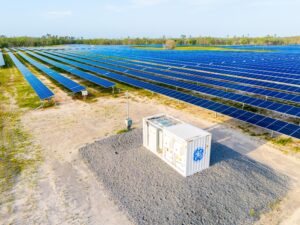
Land strategy often determines whether a project moves forward or falls apart. While interconnection delays and equipment shortages get more attention, land presents a distinct and consistently underestimated source of friction in the development lifecycle.
-
 Legal & Regulatory
Delivering Nuclear Energy: Promise vs. Regulatory Reality
In the race to decarbonize and secure America’s energy future, nuclear power is once again in the spotlight. From advanced reactors to fusion breakthroughs, the promise of nuclear energy is clear.
-
 Commentary
Emerging Digital Technologies Leading to a Greener Future
The energy industry continues to transition at a rapid pace. Across nearly every market, renewables are reliably and economically transitioning the grid from fossil fuels.
-
 Data Centers
Early-Stage Risk Mitigation—Essential Element for Data Center Financing
Lenders and investors are scrutinizing data center projects closely. Identifying and mitigating risks early helps attract investors and reduce financing costs. Clear documentation and realistic timelines are essential to securing financing. Land Control—The Foundation of Success: Land remains the cornerstone of any data center development. Verifying land control ensures the project’s legal and physical foundation […]
-
 Solar
SolarSolar’s Next Chapter: Beyond Incentives
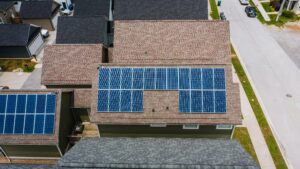
The U.S. residential solar industry has entered a new era. With the federal Investment Tax Credit (ITC) phasing out at the end of 2025, the market faces a moment of recalibration. This will likely mean a short-term decline, but it’s far from a death knell for the industry. After all, while incentives may fade, energy […]
-
 Point-Counterpoint
Welcome to the Jungle: We Got FEOC (and Games)
The One Big Beautiful Bill Act introduced sweeping changes to the Internal Revenue Code, but some of the most impactful changes for the renewable energy and fuels industries are the foreign entity of concern rules (FEOC) rules. These rules present real challenges for project owners, but they are not relevant for facilities that begin construction […]